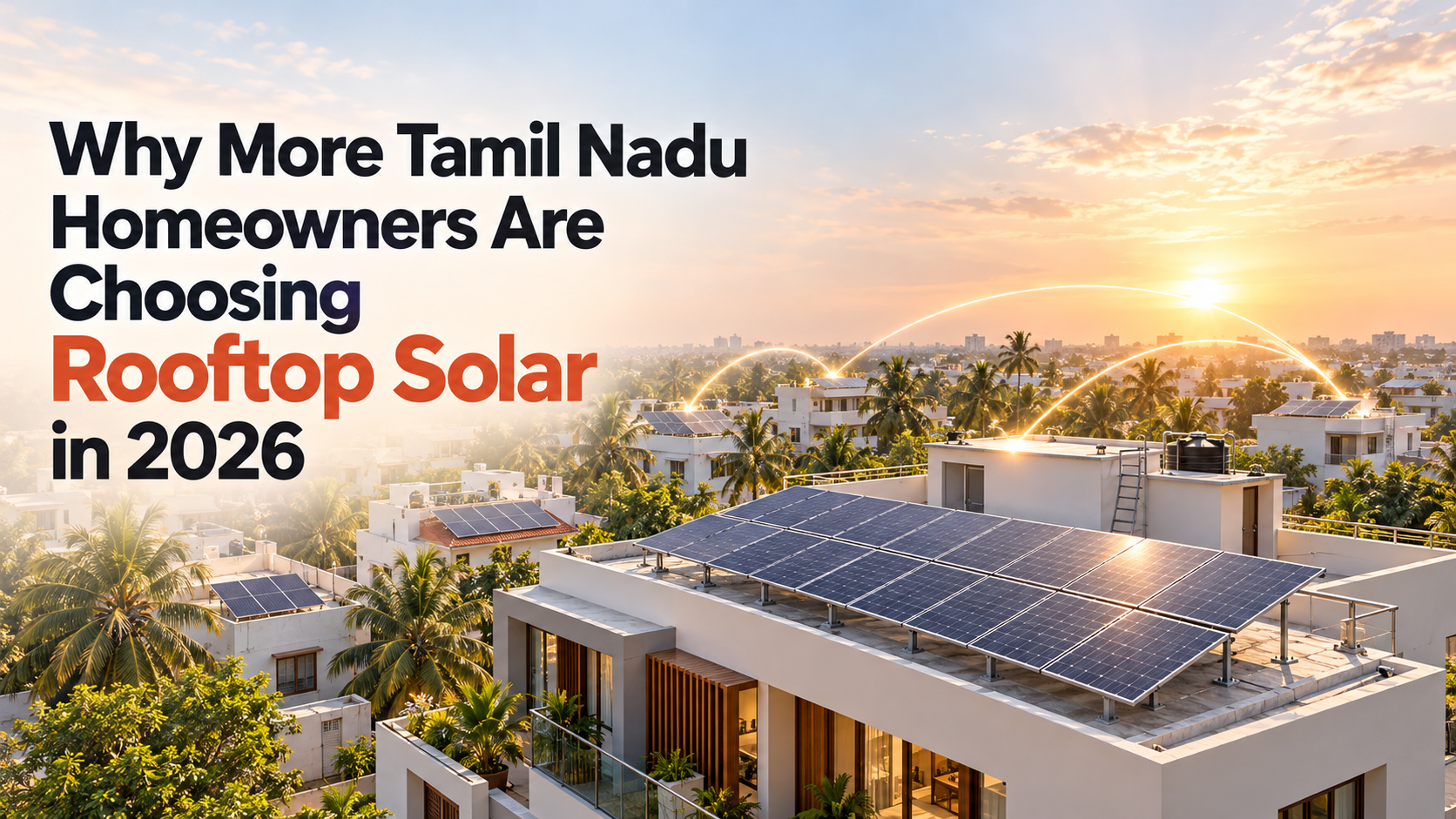
For many families, the rooftop is a space used for drying clothes, keeping water tanks or enjoying the evening breeze. It can also serve another useful purpose: generating electricity for the home.
Rooftop solar is attracting attention in Tamil Nadu as homeowners explore ways to manage electricity expenses and make better use of their property. Recent reporting from Trichy highlights an increase in solar enquiries and applications following the announcement of additional state subsidy support.
But choosing solar involves more than buying panels. Understanding your electricity consumption, roof conditions and installation requirements helps you make a decision that suits your home.
1. A Practical Way to Manage Electricity Expenses
Air conditioners, refrigerators, washing machines and other appliances contribute to a household’s electricity consumption. Rooftop solar can generate part of the electricity your home needs, reducing the amount purchased from the grid.
The savings differ from one household to another. They depend on your electricity usage, the system’s output, installation cost and the applicable electricity billing arrangements. A useful estimate should begin with your actual electricity bills rather than a promise of identical savings for every home.
Before choosing a system, ask your installer to explain the expected generation and how it relates to your household’s consumption.
2. Subsidies Help Make Solar More Accessible
The initial installation cost is an important consideration for homeowners. Government support under PM Surya Ghar: Muft Bijli Yojana helps eligible residential consumers adopt rooftop solar. Applications are handled through the national portal, where households can also select a suitable vendor.
When comparing quotations, ask for a clear breakdown of the total project cost, applicable subsidy and the amount you will need to pay. Confirm the latest eligibility conditions and application process through the official portal and your electricity distribution company.
A clear explanation at the beginning helps you plan your budget and understand the steps involved.
3. Your Rooftop Can Become a Productive Space
Solar gives homeowners an opportunity to use available roof space for electricity generation. However, every rooftop needs an individual assessment.
Nearby buildings, trees and rooftop structures can create shade. The roof’s condition, available area and panel placement also need consideration before installation. A professional assessment helps determine whether the property is suitable and how the system should be arranged.
Discuss how you currently use the terrace with your installer. Access to water tanks, maintenance areas and other essential spaces should be considered during planning.
4. The Right System Starts With Your Electricity Usage
A neighbour’s solar system may provide a useful reference, but your home may have different requirements.
Before requesting a quotation, gather your recent electricity bills and explain your household’s usage pattern. Mention any planned additions, such as another air conditioner or an electric vehicle.
Ask the installer to explain why the recommended capacity suits your home. The proposal should connect your energy needs with the available roof space, expected generation and budget. Official homeowner guidance also recommends consulting an experienced solar contractor to determine a suitable system for the home’s needs and local conditions.
5. Installation Quality Deserves Attention
When comparing solar proposals, look beyond the panel brand and headline price. Ask what the complete installation includes.
A detailed quotation should explain the equipment supplied, mounting arrangement, installation work, warranties and service responsibilities. It should also make any exclusions clear.
Useful questions include:
Which panel and inverter models are included?
What installation and electrical protection work is covered?
Who handles the required application and approval steps?
What warranties apply to the equipment and workmanship?
Who should you contact if the system develops a problem?
These questions help you compare proposals fairly and understand what you are paying for.
6. After-Sales Support Matters
Your relationship with the installer should continue after the system is commissioned. Before proceeding, ask how performance checks, service requests and warranty support will be handled.
Keep copies of your quotation, invoices, equipment details and warranty documents. Ask for a demonstration of any monitoring system included with the installation so you can understand the information it provides.
Clear service arrangements make it easier to seek help when needed and keep track of your solar investment.
7. Understand What Solar Can Do During a Power Cut
Homeowners sometimes assume that installing solar automatically provides electricity during a power cut. Backup capability depends on the system design.
A conventional grid-connected solar system generally shuts down when grid power fails. To supply electricity during an outage, the installation needs suitable backup equipment and controls, often including battery storage.
If backup is a priority, discuss it before installation. Explain which appliances you want to operate and for how long, so the installer can assess a suitable arrangement.
Make an Informed Start With Daystar Solar
The growing interest in rooftop solar gives Tamil Nadu homeowners a reason to explore what their own roof can offer. The best starting point is a clear assessment of your property, electricity consumption and expectations.
Take time to understand the proposal, verify subsidy eligibility and ask about installation quality and service support. These steps help you choose a system with confidence.
Thinking about solar for your home? Contact Daystar Solar to discuss your requirements and arrange a site assessment.